Light, Quiet and Safety: What Reliable Power Means for the People of Sabon Gari, Kano
Focus: Social Perspective | 15MWp Hybrid Solar Farm, Sabon Gari Market, Kano | Commissioned 6 June 2023 | REA/NEP | Streetlights, SCADA & 15-Year O&M
Behind the megawatts and battery ratings is a simpler story about how thousands of people work, shop and move through one of Kano's most important public spaces.
Ask anyone who has spent a day in a Nigerian market during a power outage what it sounds like — the roar of generators: dozens, sometimes hundreds of small machines coughing into life, filling narrow lanes with noise and exhaust. For traders at Sabon Gari Market in Kano, that soundtrack has been part of daily life for years.
Since 6 June 2023, a 15MWp hybrid solar farm, commissioned by the Rural Electrification Agency and built by International Consolidated Contractors Offshore SAL, has been supplying the market with centralized power. Its social impact may prove as important as its economic one.
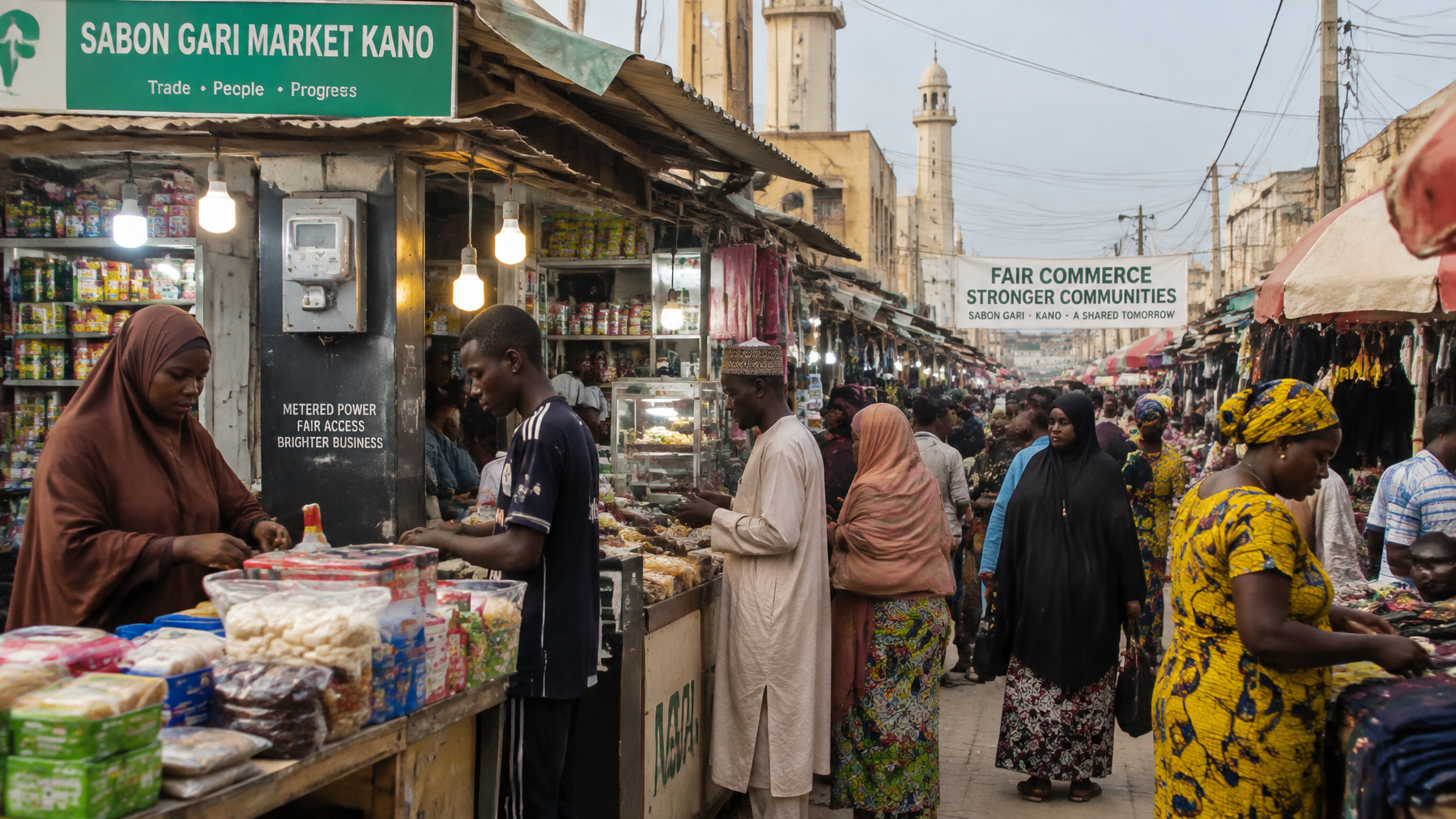
A Fairer Kind of Access
When electricity depends on owning a generator, access is unequal. Established traders with capital can afford their own machines and fuel. Smaller operators — many young people and women running modest stalls — often cannot, and they lose customers to better-equipped neighbours.
A shared, metered power supply changes that dynamic. The smallest stall can, in principle, have the same quality of electricity as the largest shop, paying only for what it uses. That is a quiet but meaningful step toward a more level playing field.
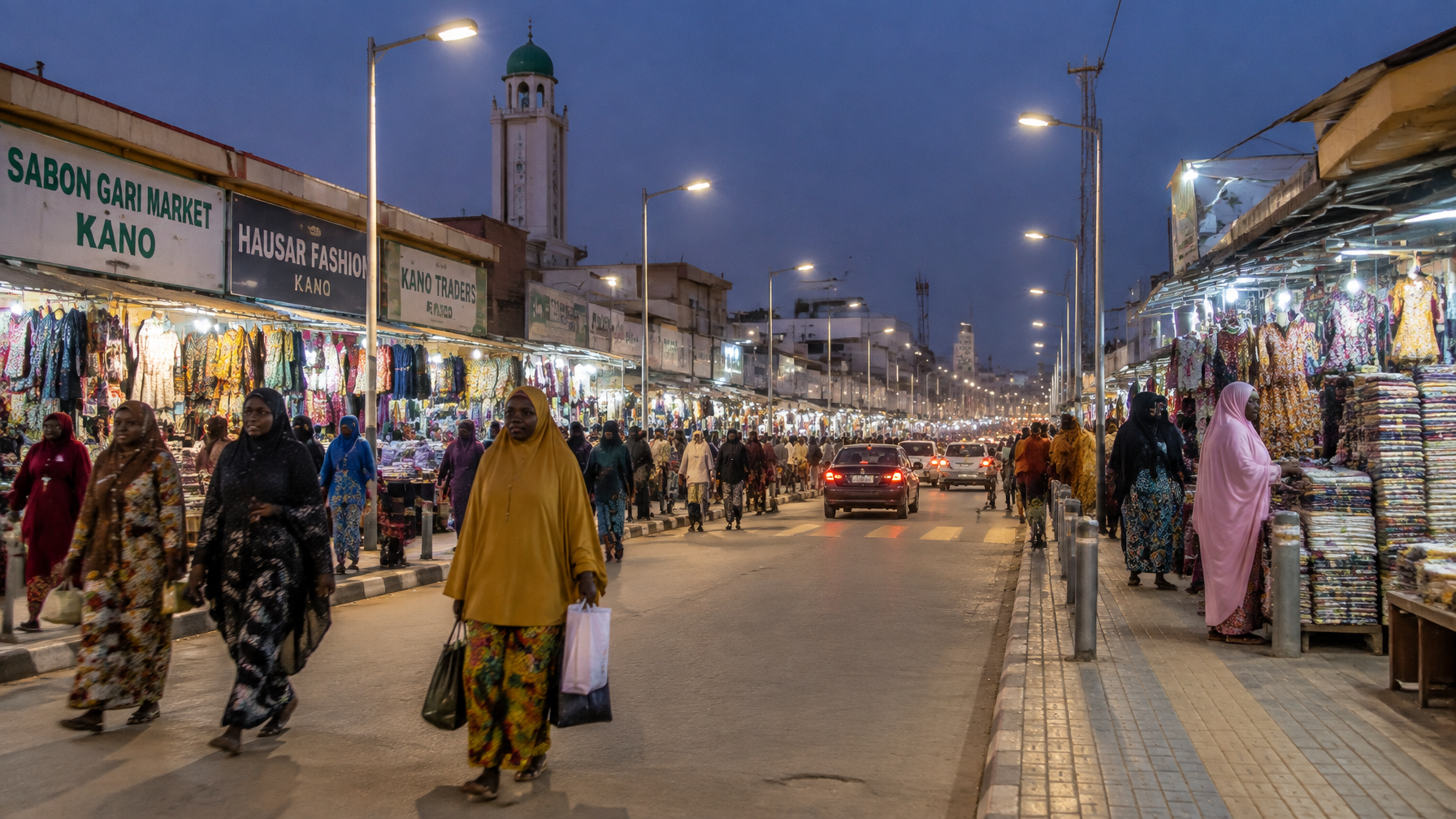
Safer Lanes, Longer Days: The Streetlight Difference
The project includes the installation and rehabilitation of streetlights — a detail that is easy to overlook but matters enormously. Well-lit lanes make evenings safer for traders closing up, for shoppers, and for the porters, drivers and vendors whose livelihoods depend on market traffic. Better lighting discourages theft and makes it easier for women in particular to trade and shop after dark with confidence.
The installation itself is monitored around the clock through security cameras, remote SCADA and metering systems, adding a visible sense that the infrastructure is being watched over and cared for.
Cleaner Air, Lower Risk
Generators do more than make noise. Operated in crowded spaces, they release fumes that affect everyone nearby, and carbon monoxide poisoning from generators in poorly ventilated areas is a recognized danger in Nigeria. Storing petrol and diesel in packed market buildings also increases fire risk — a threat markets across the country know all too well.
Replacing many scattered engines and fuel containers with a centrally managed power plant reduces those hazards at their source.
Dignity and Trust
There is also a psychological dimension. A reliable public service tells people their community is valued. Too often, Nigerians have watched infrastructure projects stall halfway or decline soon after completion. According to the REA, this project was executed on its original schedule and has been operating without technical problems, backed by a 15-year maintenance commitment. When a public investment works as promised, it builds trust between citizens and institutions.
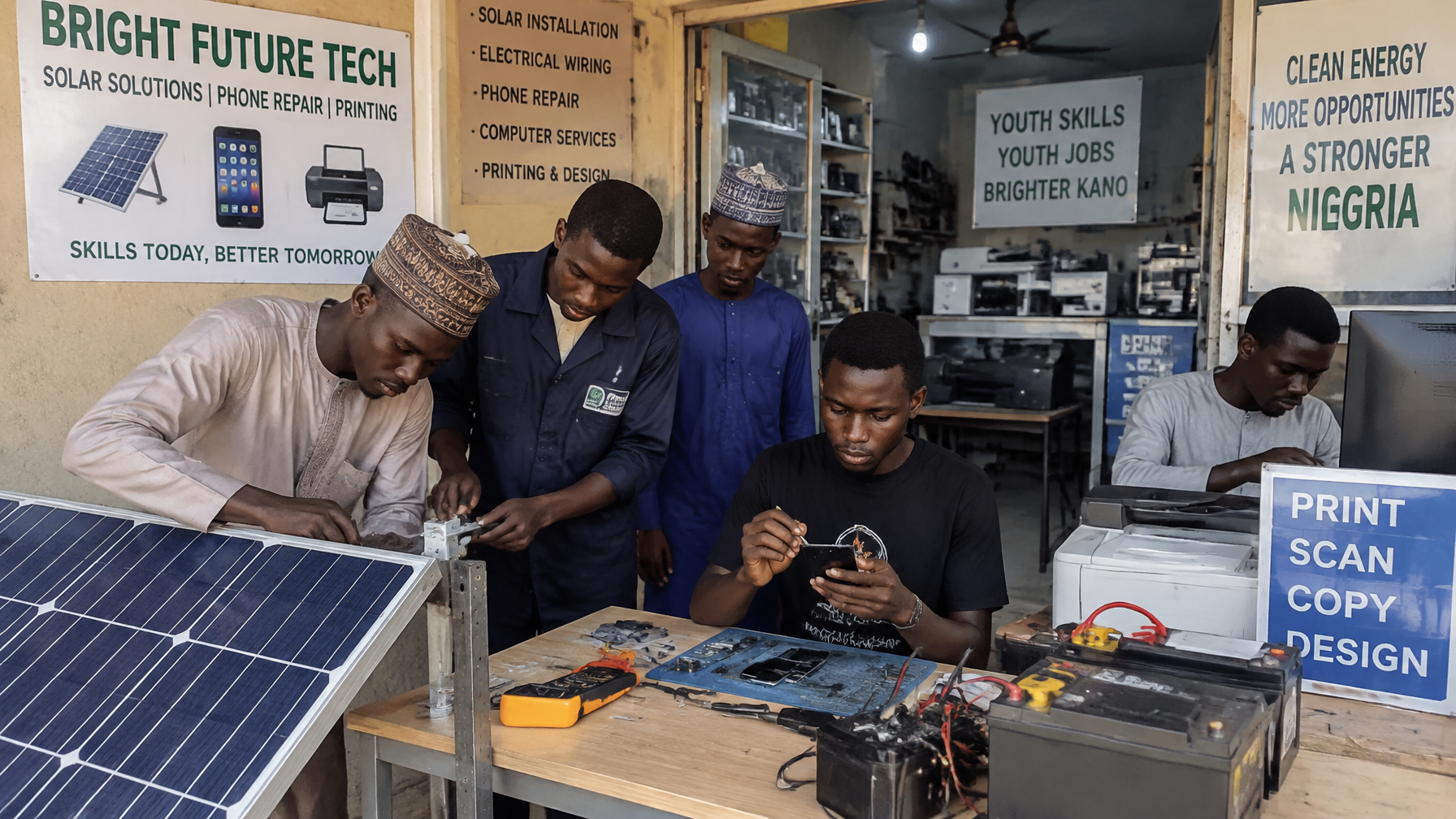
Opportunities for Young People
Reliable power opens space for new kinds of work — phone repair, printing, digital services, cold drinks and food vending all depend on electricity. Long-term operation and maintenance of the solar farm also creates demand for technical skills, from electricians to system operators, which could give young people in Kano a pathway into the growing renewable energy sector if training is prioritized.
Keeping People at the Centre
The social success will ultimately be judged by those who use it every day. Engaging traders' associations on tariffs, maintaining open channels for complaints, and ensuring benefits reach the smallest operators as well as the largest will determine whether the solar farm is experienced as a shared community asset. Early signs are encouraging: a quieter, brighter and safer market is already tangible change for thousands.
Sabon Gari Social Impact At-A-Glance
| Dimension | Before (Generators) | After (Hybrid Solar) |
|---|---|---|
| Access | Unequal - depends on owning generator | Shared, metered - smallest stall same quality as largest |
| Safety | Dark lanes, theft risk | Rehabilitated streetlights + cameras + SCADA - safer evenings for women |
| Health | Noise, fumes, CO poisoning, fire risk | Central plant - cleaner air, lower risk |
| Jobs | Limited by power | New services + 15-year technical jobs |
Frequently Asked Questions
Q: How does centralized solar make access fairer?
Instead of each trader needing a generator, everyone gets metered power from one plant — paying only for what they use, leveling the field for small stalls and women traders.
Q: Are streetlights really that important?
Yes. Well-lit lanes extend safe trading hours, reduce theft, and especially improve safety for women after dark.
Q: Will youth benefit?
Yes — from new electricity-dependent micro-businesses and from long-term technical jobs operating the solar farm, if training is prioritized.
Based on REA commissioning of Sabon Gari 15MWp hybrid solar farm 6 June 2023 under NEP, executed by ICC Offshore SAL. For latest status consult rea.gov.ng.

Comments
Post a Comment