Trading Fumes for Sunshine: The Environmental Case for Kano's Market Solar Farm
Focus: Environmental Perspective | 15MWp Hybrid Solar Farm, Sabon Gari Market, Kano | 6 June 2023 | 20-25 GWh/year Estimate | Solar-First Hybrid
By replacing a patchwork of small generators with a solar-first power system, Sabon Gari Market offers a practical model for cleaner commerce in the Sahel.
Kano sits in one of the sunniest regions of Africa, yet for decades much of its commercial activity has been powered by burning fossil fuels in small engines. The 15MWp hybrid solar farm serving Sabon Gari Market, which entered commercial operation on 6 June 2023, represents a deliberate shift in that pattern.
Built by International Consolidated Contractors Offshore SAL for the Rural Electrification Agency under the Nigeria Electrification Project, the system combines 15MWp of solar panels with a 15MW/15MWh lithium-ion battery bank and a backup fleet of synchronized diesel generators. The order of priority matters: sunlight comes first, stored solar energy second, and diesel only when needed.
Harnessing a Natural Advantage: Kano's Sunshine
Northern Nigeria's high levels of solar radiation make it well suited to photovoltaic generation. Using typical yields for the region, an array of this size could be expected to generate in the order of 20 to 25 gigawatt-hours of electricity a year, although actual output depends on weather, dust and system performance. Every unit of that energy is electricity that no longer has to come from burning fuel.
The Problem with Small Generators
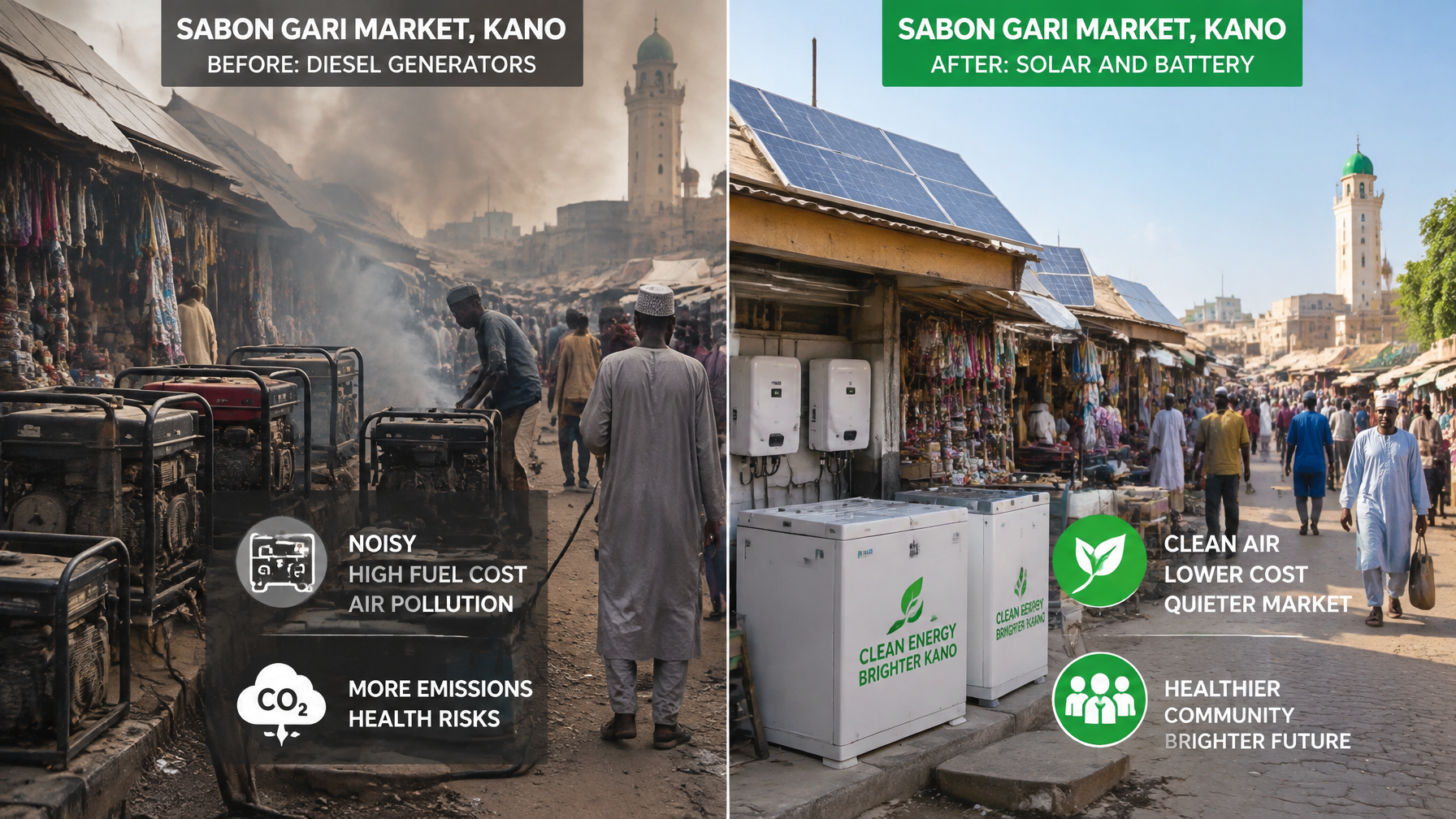
Small petrol and diesel generators are among the most polluting ways to produce electricity. They are inefficient, often poorly maintained, and release exhaust at ground level, right where people breathe. In a market setting, hundreds of them operating at once create concentrated pockets of air pollution and constant noise.
A centralized hybrid system addresses both problems. Solar and battery power produce no emissions at the point of use. When diesel generators do run, they are managed as a synchronized fleet by an energy management system — units brought online only as needed and operated closer to efficient range, rather than idling wastefully.
Depending on how much generator use the solar farm displaces, the avoided carbon emissions could run to thousands of tonnes a year, alongside reductions in soot, nitrogen oxides and other local pollutants.
Storage Makes Solar Dependable: The 15MWh Battery
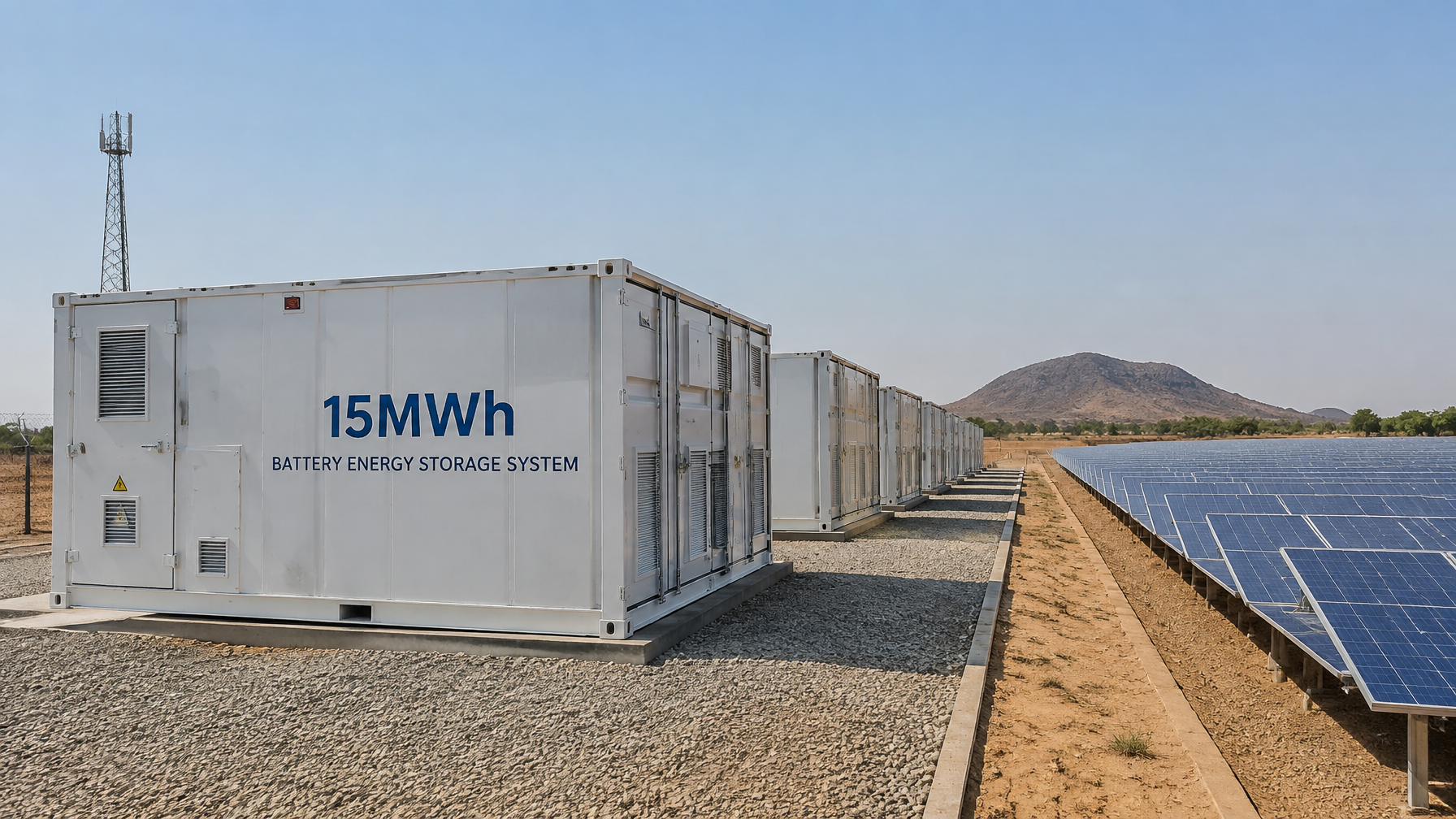
The battery system is the environmental linchpin. Without storage, solar energy is available only while the sun shines, and evening demand would fall back on diesel. A 15MWh battery allows surplus daytime solar production to be banked and used later, extending the reach of clean energy into hours that would otherwise be served by fuel.
Honest Trade-Offs
A complete environmental assessment must acknowledge limits:
- Diesel backup remains — during extended cloudy periods or dusty harmattan season, it may be needed more often
- Lithium-ion batteries have finite life — responsible handling, recycling and replacement will be important
- 15-year O&M with spares provides framework, but end-of-life management deserves clear planning
- Panel cleaning in dusty climate requires water — good practice keeps use efficient
Part of a Larger Transition: Nigeria's Net-Zero 2060
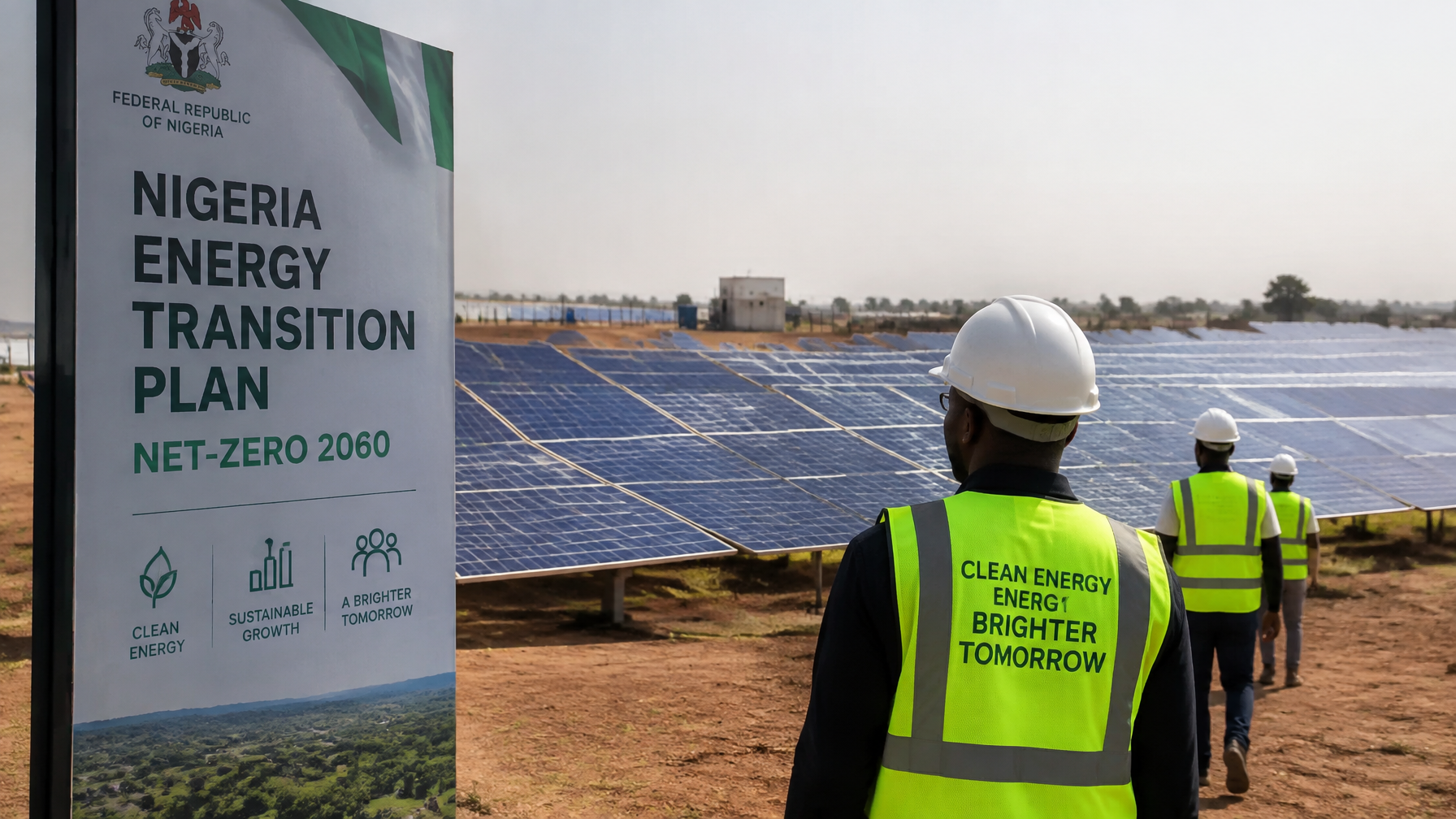
Nigeria has set out a national Energy Transition Plan with a long-term goal of net-zero emissions, and distributed renewable systems are expected to play a large role. Projects like Sabon Gari demonstrate that clean energy is not only a climate commitment but a practical tool for serving demanding commercial loads. They show renewable power can be reliable enough for a market that never really stops.
The environmental gains here are real and measurable: cleaner air in crowded lanes, less noise, reduced fuel consumption and lower emissions. If the model is replicated across Nigeria's many large markets, the cumulative effect could be substantial. Sabon Gari is not the end of fossil fuel use in Kano's commerce, but it is a clear demonstration of what a solar-first future can look like.
Sabon Gari Environmental At-A-Glance
| Item | Details |
|---|---|
| Location | Sabon Gari Market, Kano |
| System | 15MWp solar + 15MW/15MWh battery + 14x 1,100kVA synchronized diesel (solar-first priority) |
| Indicative Output | 20-25 GWh/year (regional typical, not official) |
| Avoided Emissions | Thousands of tonnes CO₂/year (depending on diesel displaced) |
| Battery Role | Banks daytime surplus for evening use - extends clean energy reach |
Frequently Asked Questions
Q: How much clean power does Sabon Gari generate?
Indicatively 20-25 GWh/year given Northern Nigeria's high irradiation — actual depends on weather, dust and performance.
Q: Does it eliminate diesel?
No. Diesel remains as synchronized backup for cloudy/Harmattan periods, but runs far less and more efficiently than hundreds of small generators.
Q: What about battery waste?
Lithium-ion batteries need responsible end-of-life recycling. The 15-year O&M with spares helps, but clear planning for replacement and recycling is key.
Based on REA commissioning of Sabon Gari 15MWp hybrid solar farm 6 June 2023 under NEP, executed by ICC Offshore SAL. Sources: REA certificate of completion; Nigeria Energy Transition Plan; BusinessDay.

Comments
Post a Comment